

Cold roll forming machines for the energy sector are designed to manufacture technical metal profiles that meet the demanding requirements of energy infrastructure, where mechanical strength, long-term durability and production stability are critical to operational performance.
A roll forming line for energy applications must be capable of continuously producing complex metal profiles used in challenging environments, including electrical infrastructure, renewable energy systems, photovoltaic installations, oil and gas facilities and heavy-duty support structures.
As a specialist in custom cold roll forming solutions, JIDET designs and manufactures bespoke roll forming lines capable of producing high-performance technical profiles while meeting the highest industrial standards for precision, repeatability and productivity.
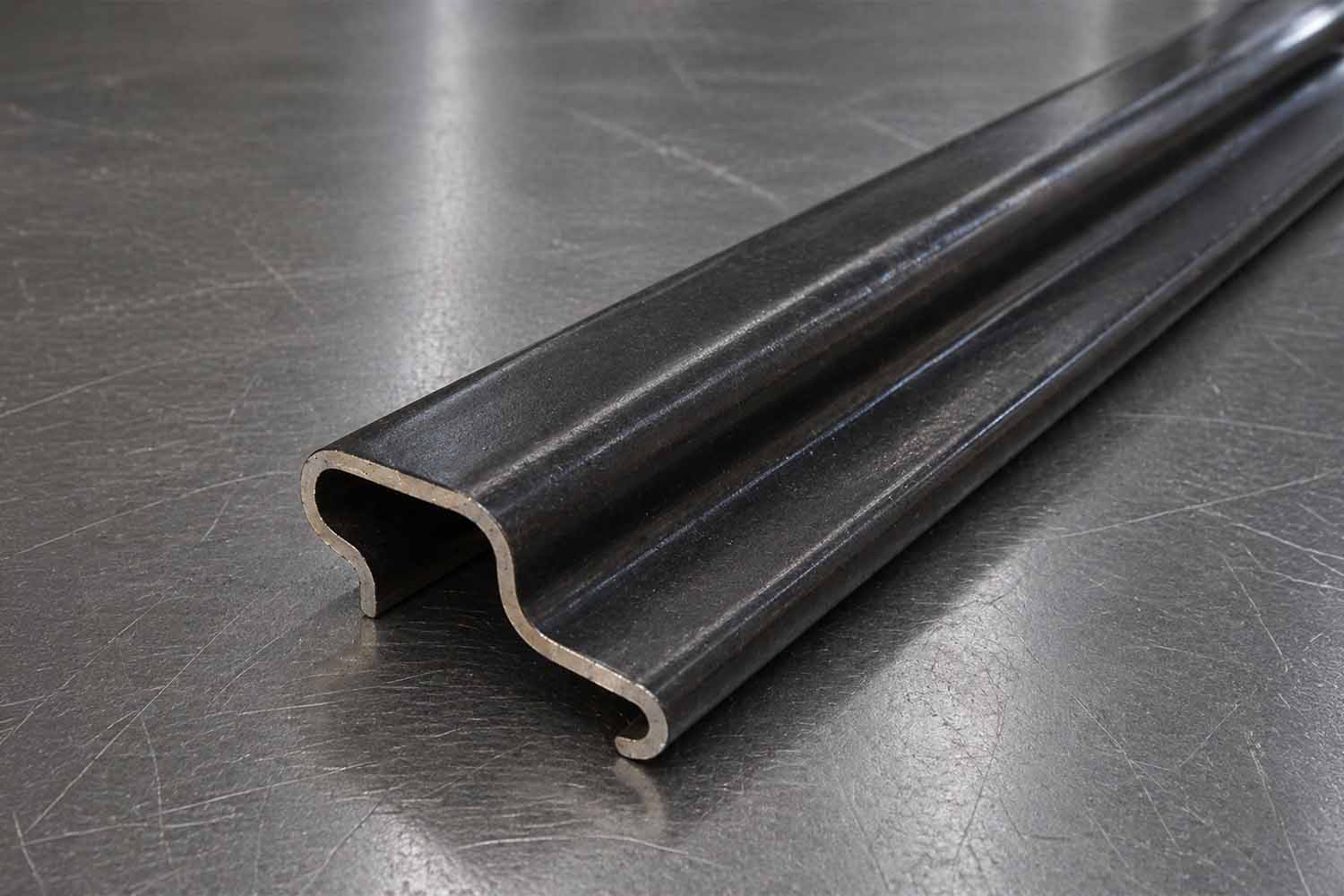
Engineering Challenges of Cold Roll Forming for the Energy Sector and Technical Metal Profiles
Manufacturing technical metal profiles for the energy industry requires a cold roll forming process capable of meeting demanding mechanical, environmental and operational requirements.
Designing a roll forming machine for energy applications involves much more than shaping metal strip. Every aspect of the production line must be engineered to ensure:
- structural strength,
- dimensional stability,
- long-term durability,
- consistent production performance,
These requirements become even more demanding when profiles are intended for outdoor installations exposed to mechanical loading, harsh weather conditions and extended service life.
Achieving reliable production therefore depends on a comprehensive engineering approach that combines material selection, profile geometry and complete control of the roll forming process.
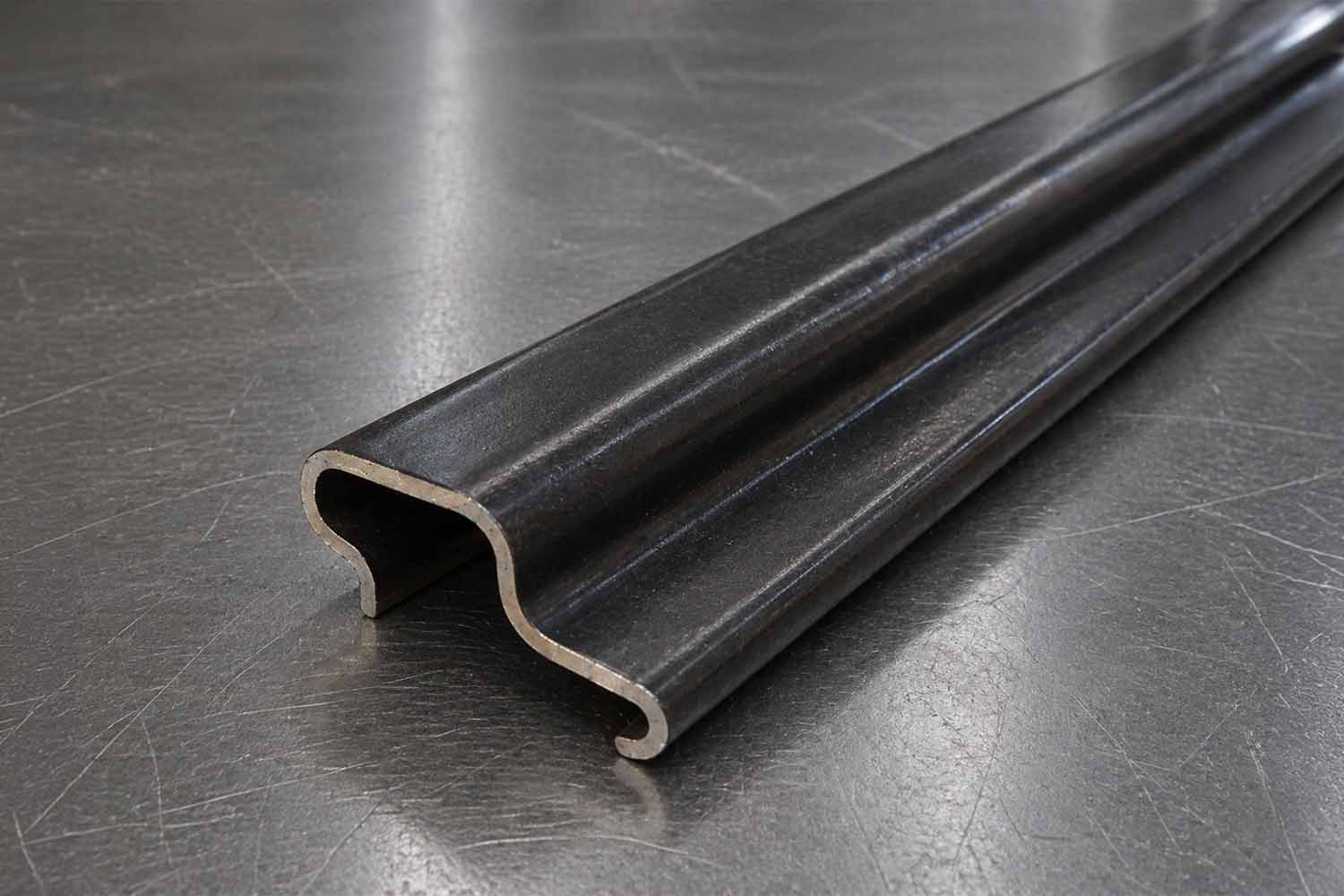
Profiles used in the energy sector are commonly manufactured from:
- structural steels,
- galvanised steels,
- pre-coated steels,
- high-strength steels,
Material selection depends on both the application and the operating environment.
These materials provide the mechanical performance, corrosion resistance and long-term durability required for infrastructure designed to operate reliably over many years, often in demanding outdoor conditions.
However, processing these materials significantly increases the complexity of the cold roll forming process.
Higher forming forces, increased tooling wear and the need to preserve protective coatings require careful engineering of the production line.
For this reason, JIDET roll forming machines are designed with precisely sized shafts, robust roll tooling and optimised drive systems capable of maintaining excellent process stability even during high-speed production.
Profiles used in energy infrastructure are designed to fulfil both structural and functional requirements.
Their geometry is determined by the need to facilitate assembly, maximise rigidity and integrate efficiently into complex industrial installations.
Typical profile configurations include:
- open sections such as U-, C- and Z-profiles,
- closed and semi-closed sections,
- high-inertia structural profiles,
- asymmetrical geometries,
- perforated profiles,
- multi-operation profiles with integrated fixing features,
These profiles are widely used in:
- photovoltaic support structures,
- cable management systems,
- electrical infrastructure,
- industrial energy installations,
Producing these geometries requires a carefully engineered cold roll forming process, where the distribution of forming passes, progressive material deformation and dimensional control are all optimised to ensure consistent profile quality.
Poor process design can lead to dimensional inaccuracies, geometric defects and assembly issues during downstream installation.
Material behaviour plays a decisive role in the successful manufacture of technical profiles for energy applications.
Phenomena such as:
- springback,
- strain hardening,
- internal stress distribution,
have a direct influence on profile accuracy, production repeatability and overall process stability.
These factors must be fully anticipated during the engineering phase to prevent:
- dimensional drift,
- profile distortion,
- production instability,
particularly during long manufacturing campaigns.
The design of the roll forming tooling, together with the number of forming stations, roll geometry and machine control strategy, determines the final quality of the finished profiles while optimising material utilisation and production costs.
Applications of Cold Roll Forming for Energy Infrastructure and Technical Metal Profiles
Cold roll forming is widely used across the energy sector to manufacture a broad range of technical metal profiles integrated into infrastructure, support systems and industrial equipment.
The process is particularly well suited to applications requiring high production throughput, exceptional dimensional repeatability and robust mechanical performance, while enabling the continuous manufacture of profiles designed to operate in demanding environments.
A roll forming line for energy applications supports the needs of a wide variety of industries, including electrical infrastructure, renewable energy, power distribution, oil and gas, and heavy industrial installations.
Cold roll forming is extensively used to manufacture support structures for energy infrastructure, where mechanical strength and assembly reliability are essential.
Typical applications include:
- cable support systems,
- cable trays,
- mounting rails,
- technical support structures for electrical and industrial networks,
Common profile types include:
- perforated C-sections,
- reinforced U-sections,
- omega profiles,
- asymmetrical Z-sections,
These components must combine excellent structural performance with consistent dimensional accuracy, ensuring full compatibility with bolted connections, modular fixing systems and industrial assembly methods.
A cold roll forming line enables these technical profiles to be manufactured continuously while integrating in-line punching and cut-to-length operations to maximise productivity.
The rapid expansion of photovoltaic installations and renewable energy projects has significantly increased demand for high-quality roll formed steel profiles.
Cold roll forming is widely used to manufacture:
- solar panel mounting rails,
- ground-mounted support structures,
- roof mounting systems,
- structural fixing components,
Typical profile geometries include:
- lightweight C-sections,
- sigma profiles,
- perforated structural profiles,
- weight-optimised profile designs,
These profiles are engineered to achieve the optimum balance between mechanical strength and weight – an essential requirement for reducing installation costs and improving the economic performance of photovoltaic projects.
A roll forming machine for photovoltaic structures must therefore deliver exceptional dimensional accuracy, outstanding repeatability and the seamless integration of manufacturing operations required for efficient on-site assembly.
Cold roll forming also plays an important role in manufacturing components used within electrical equipment and power distribution systems, where dimensional accuracy is essential for the reliable integration of electrical assemblies.
Typical applications include:
- electrical enclosures,
- power distribution supports,
- network infrastructure components,
Frequently produced profiles include:
- precision open sections,
- L-sections,
- multi-bend profiles,
- guide profiles,
These components must ensure reliable installation while maintaining exceptional repeatability during high-volume production.
By integrating in-line punching, cut-to-length and additional manufacturing operations, cold roll forming enables manufacturers to reduce secondary processing while improving productivity and overall process efficiency.
Within the oil & gas sector and heavy industrial infrastructure, roll formed profiles are required to operate under demanding mechanical and environmental conditions.
Typical applications include:
- structural support systems,
- mounting components,
- technical profiles integrated into large industrial installations,
Common profile configurations include:
- box sections,
- reinforced structural profiles,
- open tubular sections,
- high-inertia profiles,
These components are designed to withstand significant mechanical loads while maintaining long-term reliability in harsh operating environments.
Achieving this level of performance depends directly on the robustness of the cold roll forming process and the engineering of the production line, ensuring consistent profile quality and reliable manufacturing continuity.
Custom Cold Roll Forming Lines for the Energy Sector
No two energy sector projects share the same technical requirements.
Differences in profile geometry, operating environments, materials and production objectives mean that every cold roll forming line must be engineered specifically for its intended application.
Each JIDET roll forming line is designed according to:
- the geometry of the profile,
- the material to be processed,
- environmental and operating conditions,
- integrated manufacturing operations,
- production throughput and quality objectives,
Rather than supplying standard equipment, JIDET develops complete industrial manufacturing systems engineered to produce technical metal profiles with exceptional precision, repeatability and long-term reliability.
Designing a roll forming line for technical energy profiles begins with a comprehensive analysis of both the product to be manufactured and the operating conditions it must withstand.
The engineering process includes:
- sizing the roll forming stations,
- defining the number of forming passes,
- selecting the appropriate materials,
- analysing material behaviour throughout the forming process,
The mechanical design of the production line – including machine rigidity, shaft capacity and adjustment accuracy – plays a fundamental role in ensuring long-term process stability.
The objective is to deliver:
- precise profile geometry,
- stable production,
- outstanding repeatability,
even during extended production campaigns and under demanding industrial conditions.
A carefully engineered production line also anticipates springback, minimises residual internal stresses and ensures consistent dimensional conformity from the first profile to the last.
A roll forming line dedicated to the energy sector typically incorporates several manufacturing operations directly into the production process, enabling finished components to be produced in a single continuous operation.
Integrated processes may include:
- in-line punching,
- cut-to-length,
- industrial marking,
- additional forming operations,
Synchronising these operations with strip movement ensures smooth material flow and consistent production at the required manufacturing speed.
This integrated approach offers several key advantages:
- fewer handling operations,
- reduced secondary processing,
- improved production efficiency,
- consistently high product quality,
For manufacturers operating in competitive industrial markets, integrating multiple processes into a single production line is an effective way to reduce the cost per part while improving productivity and manufacturing reliability.
Manufacturers supplying the energy sector operate in environments where reliability, durability and long-term performance are essential.
To meet these requirements, cold roll forming machines must be engineered to process profiles intended for:
- outdoor installations,
- demanding mechanical applications,
- long service life,
- continuous industrial production,
Achieving these objectives depends on several key engineering factors, including:
- a rigid machine structure,
- high-precision guiding systems,
- robust roll forming tooling,
- stable production parameters throughout the manufacturing process,
This combination enables the production line to maintain outstanding dimensional accuracy despite high forming loads and demanding material characteristics, ensuring reliable production and consistent profile quality over extended manufacturing campaigns.
Rather than designing an isolated machine, JIDET develops complete manufacturing systems engineered to adapt to the product, the production process and the operating environment.
Design a Roll Forming Line for the Energy Sector with an Experienced Industrial Machinery Manufacturer
The performance of a roll forming line for energy applications depends on a comprehensive engineering approach that integrates profile geometry, material behaviour, environmental conditions and production objectives from the very beginning of the project.
A cold roll forming machine is far more than a production tool.
It is a complete industrial manufacturing system designed to deliver:
- accurate profile geometry,
- stable production,
- high production throughput,
- long-term manufacturing reliability,
By working with an experienced specialist such as JIDET, manufacturers benefit from proven expertise in designing custom roll forming lines that integrate every stage of the manufacturing process – from roll forming and in-line punching to cut-to-length and complementary operations – within one fully synchronised production system.
The result is a reliable, high-performance manufacturing solution capable of producing technical profiles for the energy industry with exceptional precision, repeatability and industrial efficiency.