

Cold roll forming machines for the industrial equipment sector are designed to manufacture a wide range of technical metal profiles, industrial components and functional parts used in production equipment, industrial machinery and complex mechanical systems.
The performance of an industrial roll forming line depends on several essential factors, including dimensional accuracy, process stability, production repeatability and the seamless integration of in-line operations such as punching, cut-to-length and additional forming processes.
Unlike more standardised applications, cold roll forming for industrial equipment involves manufacturing highly functional profiles with demanding technical requirements. These applications require outstanding product quality, high production throughput and reliable integration into increasingly complex industrial environments.
As a specialist manufacturer of custom cold roll forming machines, JIDET designs and develops industrial roll forming lines tailored to each customer’s production requirements. Every project is engineered by integrating material behaviour, production constraints and manufacturing objectives from the earliest design stages, ensuring reliable, stable and cost-effective production.
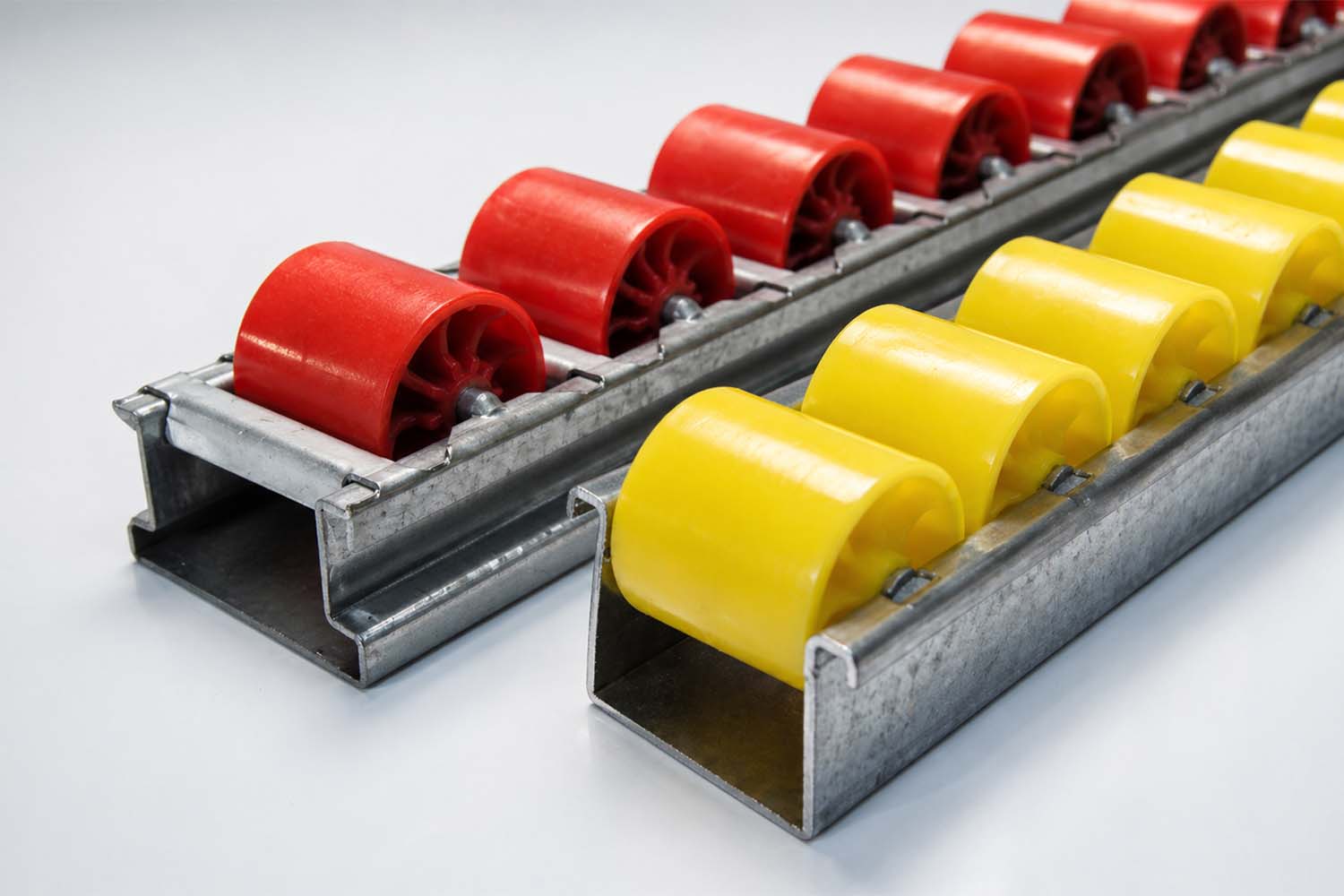
Engineering Challenges of Industrial Roll Forming Lines for Technical Profiles and Industrial Equipment
Cold roll forming for industrial equipment presents specific engineering challenges associated with manufacturing technical profiles, functional components and integrated mechanical parts.
An industrial roll forming line must simultaneously manage:
- complex profile geometries,
- a wide variety of materials,
- integrated in-line manufacturing operations,
- demanding production speed and accuracy targets,
For these reasons, a roll forming line for industrial equipment cannot be based on a standard machine configuration.
Instead, it requires a comprehensive engineering approach combining mechanical design, roll forming tooling and the manufacturing requirements of the finished product into one coherent production system.
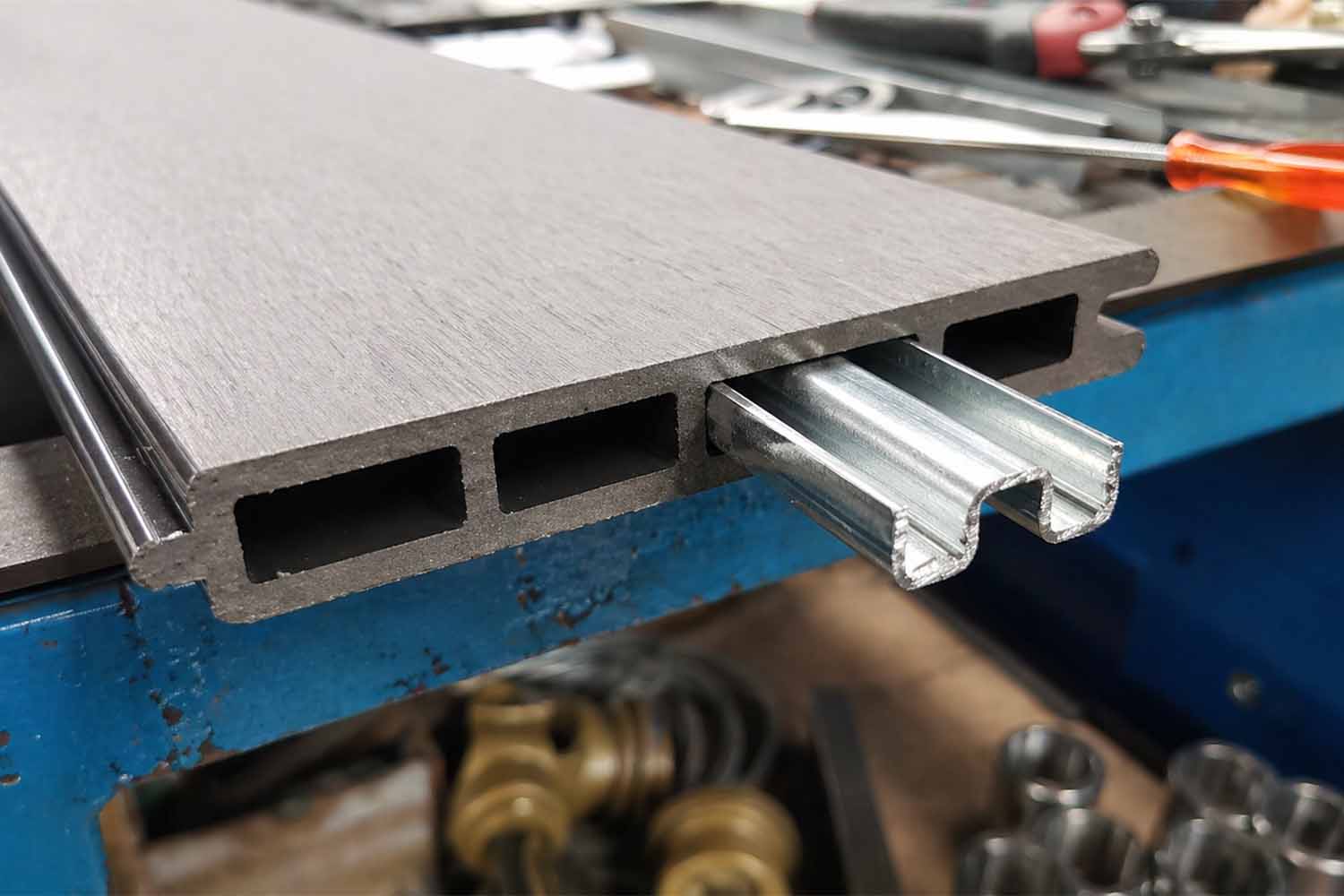
Industrial manufacturers require roll forming lines capable of combining:
- high production throughput,
- exceptional process stability,
- maximum production flexibility,
One of the most critical aspects of the process is the continuous movement of the strip.
Material flow must remain perfectly controlled throughout the production cycle, even when multiple manufacturing operations are integrated into the line.
This requires:
- precise synchronisation of every production module,
- constant strip tension control,
- stable profile guidance throughout the entire production length,
The interaction between every station—roll forming, in-line punching, cut-to-length and additional processing operations—directly determines the overall efficiency of the manufacturing process.
The objective is to maintain uninterrupted production while consistently delivering high-quality technical profiles, even during long production runs and at high operating speeds.
Profiles produced for industrial equipment frequently incorporate sophisticated geometries designed to fulfil specific mechanical or functional requirements.
These profiles commonly include:
- functional areas,
- multiple bends,
- technical flanges,
- asymmetrical or variable cross-sections,
Every stage of the cold roll forming process must progressively deform the material while preventing excessive stresses that could compromise dimensional accuracy or long-term production stability.
The design of the roll forming tooling, the forming sequence and the distribution of forming forces therefore play a decisive role in achieving consistent profile quality throughout production.
Manufacturing technical industrial components requires processing a broad range of materials, including:
- engineering steels,
- High-Strength Low-Alloy (HSLA) steels,
- coated and surface-treated materials,
Material behaviour directly affects:
- springback,
- dimensional stability,
- the mechanical performance of the finished profile,
These characteristics must be fully incorporated into the design of the cold roll forming machine, particularly when defining:
- the number of forming passes,
- forming loads,
- the geometry of the roll forming tooling,
The objective is to produce a fully compliant profile directly at the end of the production line, eliminating secondary correction operations while ensuring excellent process stability and long-term manufacturing repeatability.
Industrial Applications of Roll Forming Lines for Industrial Equipment and Technical Components
Cold roll forming is widely used in the industrial equipment sector to manufacture a broad range of technical metal profiles designed for integration into production machinery, industrial equipment and complex mechanical assemblies.
Unlike more conventional roll formed products, these components are developed to perform specific mechanical or functional roles. They therefore require exceptional dimensional accuracy, consistent quality and reliable production repeatability, while often becoming part of larger industrial systems.
Cold roll forming enables the continuous production of technical components used in a wide variety of industrial applications.
These profiles typically serve as:
- structural components,
- support elements,
- connecting parts,
- functional mechanical profiles,
Because they are frequently integrated into automated equipment or precision mechanical assemblies, maintaining tight dimensional tolerances throughout production is essential.
Even minor dimensional deviations can affect:
- assembly accuracy,
- equipment performance,
- long-term operational reliability,
A custom industrial roll forming line ensures the consistency required to manufacture these technical profiles continuously, maintaining dimensional stability even during high-volume production.
Industrial roll forming lines are extensively used to manufacture profiles incorporated into:
- production machinery,
- mechanical equipment,
- industrial support structures,
- functional mechanical systems,
These components often perform structural or load-bearing functions, requiring excellent mechanical properties throughout their service life.
Critical performance criteria include:
- structural rigidity,
- forming quality,
- dimensional stability,
The ability of the finished component to withstand mechanical loads, repeated operating cycles and long-term service conditions depends directly on the quality of the cold roll forming process.
For this reason, careful engineering of the production line—particularly the sizing of the roll forming tooling and the management of forming forces—is essential to ensure reliable and repeatable production.
Many roll formed profiles are incorporated directly into larger industrial assemblies without requiring any additional machining or secondary manufacturing operations.
This manufacturing approach places particularly demanding requirements on:
- dimensional consistency,
- functional accuracy,
- production repeatability,
Every profile must integrate perfectly with the surrounding components, ensuring full compatibility in terms of:
- geometry,
- positioning,
- dimensional tolerances,
These requirements become even more critical in automated assembly environments, where even minimal variation can lead to:
- assembly defects,
- production downtime,
- reduced product quality,
A custom roll forming line provides the level of manufacturing consistency required to secure reliable integration into automated industrial systems while maintaining long-term production stability.
Modern industrial roll forming lines increasingly integrate several manufacturing operations directly into the production process, creating a fully integrated manufacturing solution.
Typical in-line operations include:
- punching,
- cut-to-length (stop-start or flying cut-off),
- secondary forming operations,
Integrating these processes into the production line enables fully finished components to leave the machine ready for immediate assembly or use.
This approach offers several important advantages:
- fewer secondary operations,
- reduced material handling,
- improved production flow,
- greater overall process consistency,
By eliminating unnecessary transfers between production stages, manufacturers reduce manufacturing costs while improving productivity, quality and overall production efficiency.
Custom Roll Forming Solutions for Industrial Equipment
Every industrial equipment roll forming project presents its own technical challenges.
The diversity of profile geometries, processed materials and functional requirements means that industrial roll forming lines cannot be based on standard machine concepts.
Each JIDET cold roll forming machine is therefore engineered around the customer’s specific manufacturing requirements, taking into account:
- the geometry of the profile,
- the material to be processed,
- the required in-line manufacturing operations,
- production throughput,
- dimensional accuracy,
- repeatability objectives,
This engineering methodology ensures complete consistency between the production line, the roll forming tooling and every integrated manufacturing process, delivering stable production and long-term industrial performance.
Designing a roll forming line for technical industrial profiles begins with the precise engineering of the complete forming process.
The number of forming stations is determined according to both the profile geometry and the mechanical behaviour of the material, ensuring smooth and progressive deformation without introducing excessive stresses or compromising production stability.
The design of the roll forming tooling, particularly the forming rolls, is fundamental to the overall performance of the production line.
Their profile geometry, forming sequence and load distribution directly influence:
- profile quality,
- dimensional accuracy,
- long-term production repeatability,
Well-engineered tooling ensures consistent profile conformity while maintaining excellent process stability throughout extended production campaigns.
JIDET roll forming lines are designed to integrate advanced manufacturing operations directly into the production process, transforming the machine into a complete industrial manufacturing system.
In-line punching, fully synchronised with strip movement, enables functional features to be produced without secondary machining operations.
Cut-to-length systems, whether operating in stop-start mode or using flying cut-off technology, are engineered to guarantee accurate part lengths while maintaining the required production throughput.
Depending on the application, additional manufacturing processes can also be incorporated to meet the customer’s specific production requirements.
Integrating these operations within the production line enables manufacturers to produce finished components directly from the roll forming process while:
- reducing material handling,
- eliminating secondary processing,
- minimising the risk of non-conforming parts,
This fully integrated manufacturing approach contributes directly to lower production costs, shorter lead times and improved overall manufacturing efficiency.
Manufacturers of industrial equipment often operate in production environments characterised by a wide variety of products, frequent product changes and demanding quality requirements.
To support these environments, industrial roll forming lines must provide the flexibility required to accommodate:
- variable production rates,
- product changeovers,
- integration into existing manufacturing facilities,
Machine robustness, consistent equipment design and comprehensive control of the manufacturing process are all essential to maintaining reliable production over the long term.
The objective is to deliver a custom roll forming line capable of evolving alongside future production requirements while maintaining high productivity, excellent process stability and sustainable manufacturing profitability.
Design a Custom Roll Forming Line for Industrial Equipment with JIDET
As a specialist manufacturer of cold roll forming machines, JIDET develops custom roll forming lines tailored to the real manufacturing requirements of industrial equipment manufacturers.
Every project is based on a comprehensive engineering approach that integrates:
- profile geometry,
- material behaviour,
- production constraints,
- productivity targets,
By considering these parameters from the earliest stages of machine design, JIDET ensures complete consistency across the entire manufacturing process, delivering stable production, exceptional repeatability and long-term industrial performance.
Working with an experienced roll forming specialist also enables manufacturers to optimise the interaction between machine design, tooling and integrated manufacturing operations, securing a production system capable of supporting future industrial growth while maintaining outstanding product quality.