

Cold roll forming machines for the construction industry are designed to ensure the continuous production of metal profiles used in building construction, building envelope systems and secondary steel structures, within industrial environments where production throughput, dimensional accuracy and process stability directly determine manufacturing profitability.
A construction roll forming line must deliver consistent dimensional accuracy, high production rates and outstanding repeatability over extended production runs to meet the requirements of applications such as tracks, studs, purlins, steel decking and cladding profiles.
JIDET designs custom construction roll forming lines capable of integrating these requirements from the earliest engineering stages by sizing the complete production system to ensure process consistency and long-term manufacturing stability.
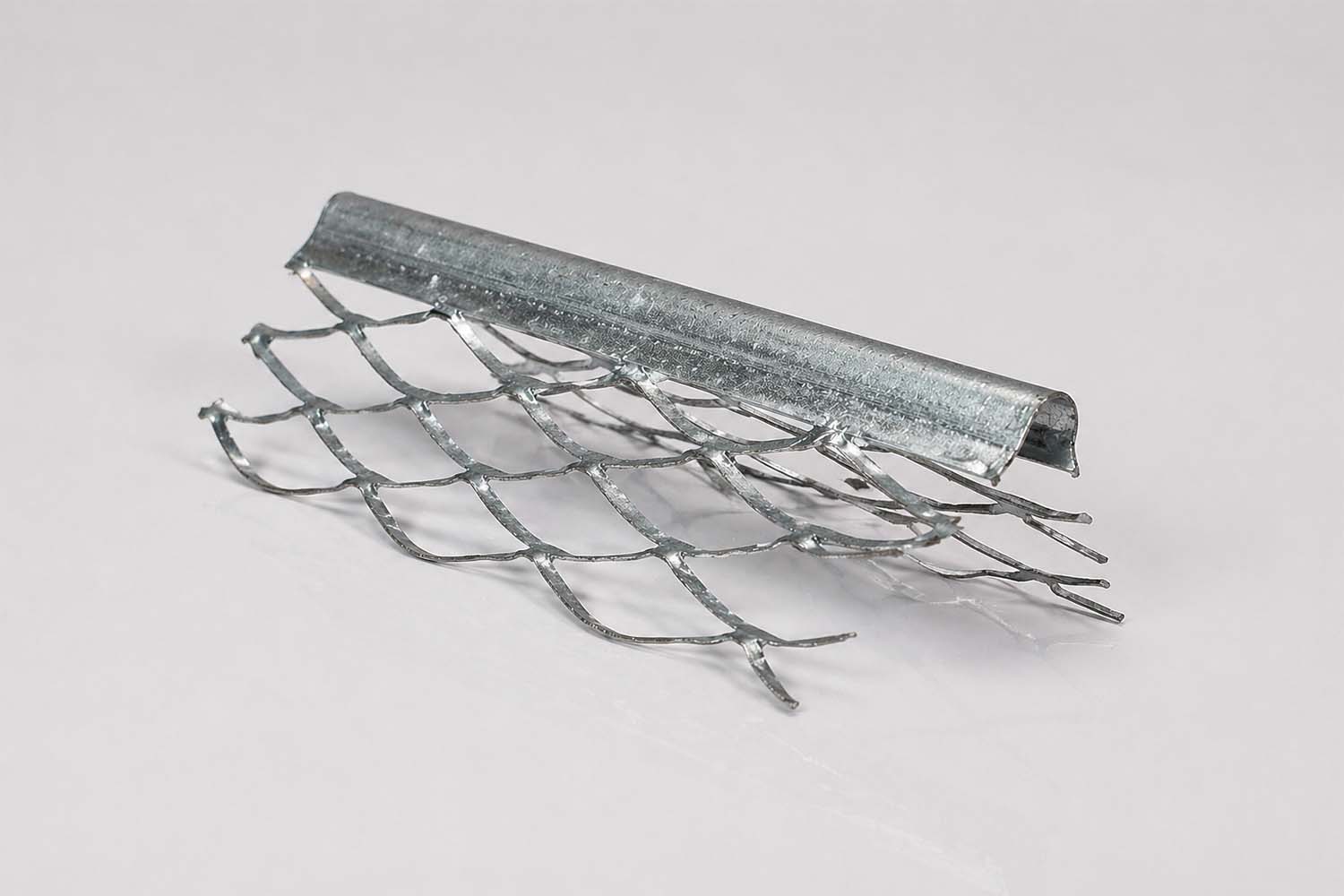
Technical Challenges of Cold Roll Forming Lines for the Construction Industry and Structural Metal Profile Manufacturing
Cold roll forming for the construction sector addresses specific industrial requirements associated with the continuous production of metal profiles used in building construction, building envelope systems and secondary steel structures.
A construction roll forming line must be engineered to manufacture functional profiles with exceptional levels of dimensional accuracy, repeatability and process stability, while operating at high production speeds within highly competitive industrial environments.
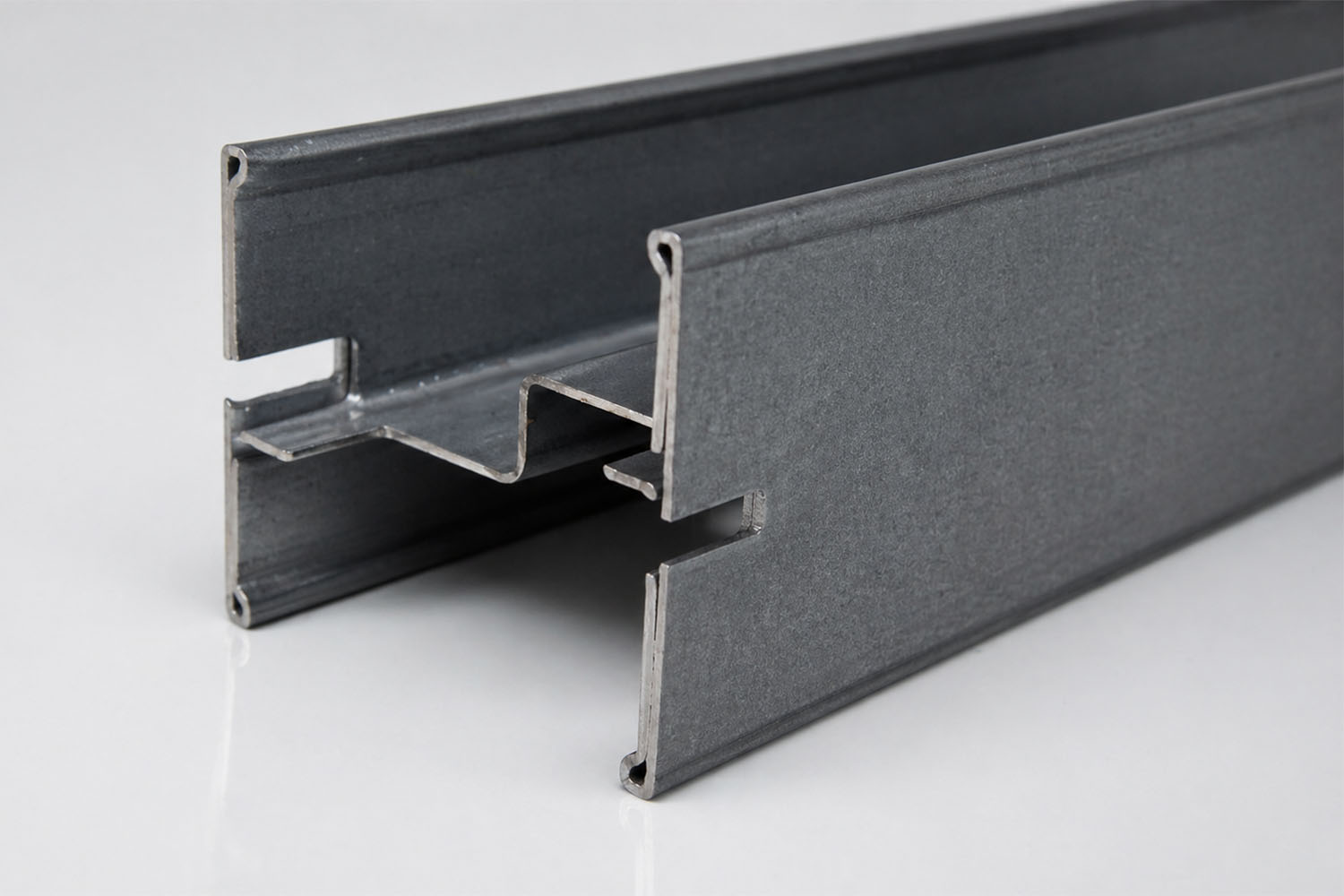
Construction roll forming lines are designed for continuous, high-speed production in order to satisfy the substantial manufacturing volumes required by the building industry.
This production philosophy demands complete control of material flow together with perfect synchronisation of every subsystem integrated within the production line.
Process stability depends on smooth, uninterrupted strip movement without tension fluctuations or dynamic disturbances, combined with precise coordination of in-line punching, cutting and any complementary forming operations.
Dimensional repeatability must remain constant over long production runs, with no geometric drift or dimensional variation.
Construction metal profiles encompass a wide range of geometries, from standard C-sections, U-sections and Z-sections to more complex profiles such as omega sections, cladding profiles, ribbed profiles and profiles incorporating functional lips.
These geometries are designed to satisfy structural performance, assembly requirements and seamless integration into modern building systems.
Their complexity requires highly accurate engineering of the roll forming tooling.
The sizing of the forming rolls, their geometry and the progression of the roll forming sequence must ensure gradual, controlled deformation of the strip without generating excessive stresses or profile defects.
The objective is to maintain consistent profile geometry throughout the entire product length, providing the dimensional conformity essential for on-site assembly and the long-term structural performance of the finished building.
The cold roll forming of galvanised, pre-painted and structural steel strip for construction applications requires precise control of material behaviour throughout the manufacturing process.
The mechanical properties of the material directly influence the way the strip deforms and stabilises within the roll forming line.
Phenomena such as:
- springback,
- strain hardening,
- residual internal stresses,
must all be incorporated into the engineering of the production line from the earliest design stages.
The number of forming passes, the geometry of the roll forming tooling and the distribution of forming forces all determine the long-term stability of the finished profile.
Applications of Cold Roll Forming Lines for the Construction Industry and Structural Metal Profile Manufacturing
Cold roll forming for the construction industry enables the continuous manufacture of a wide range of metal profiles used in building construction, building envelope systems and secondary steel structures.
A construction roll forming line is designed for high-volume production while delivering exceptional dimensional accuracy, repeatability and long-term process stability over extended profile lengths.
The production of tracks and studs for light steel framing (LSF) is one of the principal applications of construction roll forming lines.
These profiles are widely used in partition systems, lining systems and lightweight structural frameworks, where dimensional accuracy directly determines assembly quality.
Manufacturing these profiles requires precise control of profile geometry, particularly for open C-sections and U-sections, which frequently incorporate functional lips.
Dimensional repeatability must remain constant to ensure accurate interlocking and alignment during on-site installation.
The integration of in-line punching is a key element of the manufacturing process.
It enables the production of:
- service openings,
- fixing holes,
- functional apertures,
directly during production without secondary operations.
This approach optimises manufacturing flow while reducing downstream processing.
Construction roll forming lines dedicated to roofing and cladding applications manufacture long profiles such as:
- steel decking,
- ribbed roofing profiles,
- metal cladding profiles,
These applications combine structural performance with architectural appearance, making both dimensional accuracy and surface quality essential.
For pre-painted steel, maintaining an unmarked surface is particularly important.
The roll forming process must prevent:
- surface marking,
- scratches,
- visible deformation,
while ensuring perfectly consistent profile geometry over the full production length.
A high-performance construction roll forming line therefore combines careful material handling with precise forming control to preserve both the functional and aesthetic quality of the finished products.
The manufacture of purlins and structural profiles concerns load-bearing elements used in steel-framed buildings and industrial structures.
Typical products include:
- Z-purlins,
- C-purlins,
- application-specific structural sections,
These profiles are required to meet demanding mechanical performance criteria.
Profile rigidity is a key parameter.
It depends on:
- profile geometry,
- material thickness,
- the quality of the cold roll forming process,
Dimensional accuracy is equally essential to ensure proper load distribution and full compatibility with structural assembly systems.
Maintaining these characteristics throughout long production runs is fundamental to achieving reliable structural performance.
Technical profiles for building systems encompass a broad range of specialised applications serving specific construction functions.
Typical examples include:
- fixing profiles,
- technical support sections,
- connection profiles,
- profiles integrated into complex construction systems,
The manufacturing process delivers stable high-speed production while allowing the integration of in-line punching, cutting and other complementary manufacturing operations.
These profiles frequently incorporate specialised functional areas requiring exceptional dimensional precision.
Dimensional tolerances are particularly demanding when the profiles are intended for integration into prefabricated building systems or automated manufacturing processes.
The integration of in-line punching enables:
- holes,
- slots,
- functional cut-outs,
to be produced directly during manufacturing.
This approach allows fully finished profiles to leave the production line, reducing secondary operations while maintaining complete process consistency.
Custom Cold Roll Forming Lines for the Construction Industry: JIDET Industrial Machine Solutions
Designing a construction roll forming line for structural metal profiles requires the integration of every project parameter, from profile geometry through to the organisation of the complete manufacturing flow.
The choice of material – including galvanised steel, pre-painted steel or structural steel – directly influences material behaviour, forming forces and equipment sizing.
The in-line operations to be integrated, such as punching and cutting, must remain perfectly synchronised with strip movement.
Finally, target production rates and productivity objectives define the overall architecture of the production line.
Within this context, JIDET develops construction roll forming solutions based on a comprehensive systems engineering approach designed to ensure:
- complete process consistency,
- long-term production stability,
- optimum industrial profitability,
The design of a construction roll forming line is based on the precise sizing of the roll forming stations and their associated roll forming tooling.
The number of forming passes is determined according to the geometric complexity of the profile and the mechanical behaviour of the material, ensuring gradual and controlled deformation throughout the manufacturing process.
The geometry of the forming rolls is a fundamental element of the process.
It directly influences:
- the distribution of forming forces,
- strip stability,
- the dimensional quality of the finished profile,
Poor tooling design may lead to:
- geometric defects,
- excessive residual stresses,
- unstable production conditions,
A correctly engineered construction roll forming line ensures consistent profile quality, outstanding process stability and reliable long-term manufacturing performance.
Construction roll forming lines frequently incorporate in-line manufacturing operations, including:
- punching,
- cut-to-length,
- in certain applications, industrial marking,
This level of integration transforms the roll forming line into a complete industrial manufacturing system capable of producing fully finished profiles directly at the end of the production line.
In-line punching enables the production of:
- holes,
- slots,
- functional openings,
without secondary operations, while maintaining perfect synchronisation with strip movement.
Cut-to-length systems, whether operating in stop-start mode or as flying cut-off systems, must guarantee precise profile lengths while maintaining the required production throughput.
This fully integrated approach reduces downstream operations, improves manufacturing efficiency and ensures complete consistency throughout the production process.
Construction roll forming machines are engineered to meet the specific requirements of the building industry, regardless of the materials processed, production lengths or productivity objectives.
The processing of galvanised steel and pre-painted steel requires particular attention to:
- surface quality,
- control of forming forces,
- stable material handling throughout the production process,
Production lines must be capable of manufacturing long profiles while maintaining:
- consistent process stability,
- constant profile geometry,
- outstanding dimensional repeatability,
High production rates also require a robust machine architecture together with perfect coordination between every module integrated within the production line.
This systems engineering approach enables manufacturers to achieve reliable, long-term industrial performance while meeting the demanding productivity objectives of the construction sector.
Design a Cold Roll Forming Line for the Construction Industry with an Experienced Industrial Machinery Manufacturer
The performance of a construction roll forming machine depends on a comprehensive engineering approach in which profile geometry, material behaviour, production constraints and productivity targets are all closely interconnected.
A cold roll forming line must therefore be engineered as one coherent industrial system capable of delivering outstanding dimensional accuracy, long-term process stability and exceptional repeatability throughout production.
Within this context, partnering with an experienced manufacturer such as JIDET ensures that every critical engineering parameter is fully integrated from the earliest design stages.
Each construction roll forming line is developed according to a systems engineering methodology that secures:
- complete process consistency,
- stable production over extended manufacturing campaigns,
- optimised overall production line performance,
The result is a fully customised industrial solution capable of meeting the demanding technical, economic and productivity requirements of modern construction profile manufacturing.